
Vinyl Windows vs Wood Windows: Durability, Cost and Maintenance Compared
When choosing between vinyl windows vs wood windows, vinyl is the more affordable, low-maintenance option while wood delivers superior aesthetics and potentially longer lifespan. Your decision will ultimately depend on your budget, your local climate, and how much upkeep you are willing to take on over the years.
Key Takeaways
- Vinyl windows cost $250 to $900 per window installed, while wood windows run $600 to $1,400, making vinyl significantly more budget-friendly upfront.
- Wood windows can last 30 to 50+ years, but only with consistent maintenance including repainting or restaining every 3 to 7 years.
- Vinyl requires virtually no maintenance beyond occasional cleaning, but it cannot be repainted once installed.
- Wood frames are naturally better insulators, though modern multi-chamber vinyl frames have closed the energy efficiency gap considerably.
- Over a 30-year period, wood window maintenance costs can add $1,500 to $4,500 per window in paint, stain, sealant, and labor.
- Your local climate is one of the most important factors: vinyl struggles in extreme heat while wood is vulnerable to humidity and moisture.
Why Window Material Matters More Than You Might Think
Most homeowners focus on glass type and style when shopping for new windows, but the frame material is just as critical. It affects how your windows look, how long they last, how much energy you use, and how much time and money you spend maintaining them over the years.
According to the U.S. Department of Energy, windows account for 25 to 30 percent of a home’s heating and cooling energy use. That means the wrong frame material for your climate can quietly inflate your utility bills for decades. Getting this decision right from the start, whether that means pursuing professional window installation or doing thorough research beforehand, sets you up for long-term savings.
In 2025, vinyl holds about 29% market share among homeowners while wood sits at 18%, according to industry tracking data. Both materials have loyal followings, and both have real strengths that make them the right choice in the right situation.
Cost Breakdown: Vinyl Windows vs Wood Windows
The price difference between these two materials is significant and it compounds quickly when you are replacing multiple windows.
| Cost Factor | Vinyl Windows | Wood Windows |
|---|---|---|
| Per window installed | $250 to $900 | $600 to $1,400 |
| 10-window project estimate | $2,500 to $9,000 | $6,000 to $14,000 |
| Maintenance per window (30 yrs) | Minimal | $1,500 to $4,500 |
| Repainting/restaining frequency | Not needed | Every 3 to 7 years |
| Lifespan | 20 to 40 years | 30 to 50+ years |
Wood windows cost roughly 50% to 100% more than vinyl depending on the wood species, window style, and manufacturer. A standard double-hung vinyl window might run $300 to $500 installed, while a comparable wood unit could cost $800 to $1,200 or more. Multiply that across a full house and you are looking at a gap of thousands of dollars.
However, upfront cost is only part of the equation. Wood’s long-term maintenance expenses are substantial. Without regular painting or staining, wood frames rot, warp, and crack. If you factor in labor and materials for repainting every five years or so, wood windows can cost an additional $1,500 to $4,500 per window over a 30-year span. That erases a lot of the aesthetic premium you are paying for.
If you are planning a full window replacement project, getting an accurate estimate that includes long-term ownership costs will help you compare these options fairly rather than just looking at the sticker price.
Lifespan and Durability: Which Window Holds Up Longer?
Both materials are durable, but they fail in different ways and in different environments.
Vinyl Durability
Vinyl windows typically last 20 to 40 years with minimal upkeep. Their biggest vulnerability is extreme heat. In regions with prolonged sun exposure and high temperatures, vinyl frames can warp, discolor, or become brittle over time. This is worth considering if you live in the Southwest or another region with intense summer sun.
On the other hand, vinyl handles moisture extremely well. It will not rot, swell, or require sealing, which gives it a real advantage in humid climates or areas with significant rainfall.
Wood Durability
Wood windows can outlast vinyl by a decade or more, with lifespans of 30 to 50+ years when properly maintained. Many historic homes across the United States still have original wood windows that are functioning after 80 or 100 years, a testament to the material’s longevity potential.
The critical word, though, is “maintained.” Without consistent repainting or restaining every 3 to 7 years, wood frames are highly susceptible to moisture damage. In humid regions, poorly maintained wood can swell, warp, or develop rot within just a few years. Coastal climates and rainy areas like the Pacific Northwest are especially harsh on neglected wood frames.
The Mayo Clinic’s research on indoor air quality has also noted that rotting wood can contribute to mold growth inside wall cavities, which adds a health dimension to the maintenance question.
Energy Efficiency: A Closer Contest Than You’d Expect
Wood has a natural advantage as an insulating material. Wood frames have lower thermal conductivity than vinyl, meaning they transfer less heat and cold through the frame itself. For decades, this gave wood windows a clear edge in energy performance.
Modern vinyl frames have significantly closed that gap. Today’s premium vinyl windows use multi-chamber frame designs that trap air within the frame, reducing thermal transfer. Many also incorporate foam insulation inserts that boost performance further. ENERGY STAR certified windows are available in both materials, and premium vinyl units with triple-pane glass and low-E coatings now perform nearly on par with comparable wood windows.
The practical takeaway: if energy efficiency is your primary concern, do not rule out vinyl. A quality vinyl window with double or triple pane glass and a low-E coating will meaningfully reduce your heating and cooling costs regardless of what the frame is made from.
That said, if you are building or restoring a home where maximum thermal performance matters and budget is not the deciding factor, wood still holds a slight natural edge in the frame itself.
Aesthetics and Customization: Where Wood Wins Decisively
This is where the two materials diverge most sharply, and where homeowners with strong opinions often make up their minds quickly.
The Case for Wood
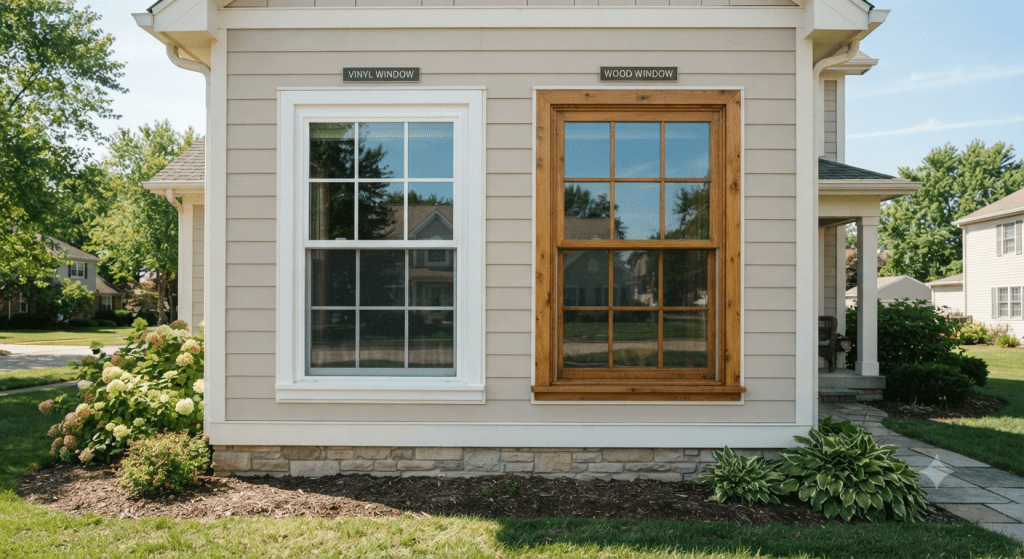
Wood offers a warmth, richness, and visual character that no synthetic material has fully replicated. The natural grain, the weight, the way it holds paint and stain, all of it contributes to an aesthetic that feels premium and timeless. Wood can be painted any color and restained as design trends evolve, giving you flexibility over decades of ownership.
For historic homes, craftsman-style houses, or properties in neighborhoods with strict architectural review, wood is often the preferred or required material. It also typically contributes to higher resale value, particularly in markets where buyers expect premium finishes.
The Case for Vinyl
Vinyl has improved considerably in appearance over the past 20 years. Modern vinyl windows come in a range of colors and woodgrain textures designed to mimic the look of real wood at a fraction of the cost. However, vinyl cannot be repainted once installed. The color you choose is the color you live with until replacement day.
Vinyl’s clean, contemporary appearance works well in modern builds and in homes where low-maintenance is prioritized over aesthetics. It simply lacks the richness and customizability of real wood.
Working with an experienced window supplier can help you review actual samples of both materials side by side before making a commitment, which is always worth doing before signing a contract.
Climate Considerations by Region
Your geographic location should play a major role in this decision. Here is how each material stacks up in common U.S. climate types:
- Hot, sunny climates (Southwest, South): Vinyl is at risk of warping or discoloring in sustained extreme heat. Wood, if well-sealed, handles heat better, but moisture sealing is still essential.
- Cold climates (Northeast, Upper Midwest): Both materials perform well. Wood’s natural insulation gives it a slight edge, but quality vinyl with multi-chamber frames is competitive.
- Humid climates (Southeast, Pacific Northwest): Wood requires rigorous maintenance to avoid rot and swelling. Vinyl is the lower-risk choice here.
- Moderate climates (Mid-Atlantic, Mountain West): Both materials are well-suited. Budget and aesthetics can be the deciding factors.
The National Oceanic and Atmospheric Administration’s climate data can give you a clear picture of your local temperature and humidity patterns, which is useful context when making a long-term material decision.
Things to Know
- Vinyl windows were first developed in the 1970s as a lower-cost alternative to wood, and they now account for a larger market share than wood nationwide.
- Many wood windows sold today are actually clad windows, meaning they have a wood interior with a vinyl or aluminum exterior cladding, which reduces maintenance while preserving the interior aesthetics.
- Vinyl cannot be painted after installation, so color selection is permanent until the window is replaced.
- Historic districts and some homeowners’ associations may restrict or prohibit vinyl windows based on architectural standards.
- Forbes Home coverage on replacement window costs notes that labor typically accounts for 25 to 40 percent of total project cost regardless of the frame material you choose.
- Both wood and vinyl windows qualify for the federal Energy Efficient Home Improvement Credit if they meet ENERGY STAR requirements, potentially saving you up to $600 on your tax return.
Frequently Asked Questions
Q: What is the downside of vinyl windows?
Vinyl windows cannot be repainted and may warp or discolor under extreme heat.
Once a vinyl window is manufactured in a specific color, that color is permanent. You cannot repaint it to match a home renovation later on. Additionally, in climates with very high temperatures and prolonged sun exposure, vinyl frames can become brittle, warp slightly, or fade over time. They also tend to have a less premium appearance compared to real wood, which can affect resale appeal in certain markets.
Q: What is the best replacement window on the market?
There is no single best replacement window since the right choice depends on your budget, climate, and home style.
Brands such as Andersen, Pella, Marvin, and Milgard consistently receive strong reviews from homeowners and industry experts. Each offers a range of products across price points. Your best starting point is to identify your priorities, whether that is energy efficiency, aesthetics, price, or warranty, and then compare models within that category from reputable manufacturers.
Q: Are Andersen windows wood or vinyl?
Andersen manufactures both wood and vinyl windows across different product lines.
Their 400 Series and A-Series lines feature wood interiors with exterior cladding, while their 100 Series (Fibrex) uses a proprietary composite material that blends wood fiber and vinyl. Andersen is one of the largest window manufacturers in the United States and offers options across a broad price spectrum, making them worth reviewing regardless of which material direction you are leaning.
Q: What is the average cost to replace 10 windows in a house?
Replacing 10 windows typically costs between $3,000 and $14,000 depending on the material, style, and labor rates in your area.
Vinyl windows run approximately $250 to $900 each installed, putting a 10-window vinyl project at $2,500 to $9,000. Wood windows at $600 to $1,400 each installed bring a 10-window project to $6,000 to $14,000. Labor, accessibility, and window size will all affect the final number, so getting multiple quotes from licensed contractors in your area is highly recommended.
Q: Who makes the best windows now?
Andersen, Pella, Marvin, and Milgard are consistently ranked among the top window manufacturers in the United States.
Andersen and Pella lead in brand recognition and product variety, offering both vinyl and wood options at various price points. Marvin is well-regarded for premium wood and clad windows. Milgard is a strong choice in the Western U.S. for vinyl and fiberglass. The best brand for you will depend on what is available in your region and which aligns with your budget and performance requirements.
The Bottom Line on Vinyl Windows vs Wood Windows
Choosing between vinyl windows vs wood windows comes down to four core factors: how much you want to spend upfront, how much maintenance you are willing to commit to, what climate you live in, and how important aesthetics are to your home. Vinyl is the practical, cost-effective choice for most modern homeowners, offering solid energy performance, minimal upkeep, and a price point that leaves room in the budget for other priorities. Wood delivers something vinyl simply cannot replicate: a natural, timeless beauty that adds real character and potentially higher resale value to the right home.
Your next step is to get a professional assessment of your specific home, your current windows, and your local climate before making a final decision. The team at Chattanooga Window Company can walk you through both options with real samples, accurate quotes, and honest recommendations based on your situation rather than a one-size-fits-all answer.