

Window Maintenance Tips That Keep Your Windows in Perfect Condition Year-Round
Proper window maintenance tips come down to a few core habits: inspect your windows twice a year, keep the glass and tracks clean, and address weatherstripping and caulk before small issues turn into costly repairs. Windows that receive regular attention last significantly longer, perform better in extreme temperatures, and keep your energy bills in check.
Key Takeaways
- Inspect your windows at least twice a year for cracks, seal failure, and weatherstripping wear.
- Clean glass inside and out with a vinegar-and-water solution to improve energy efficiency and visibility.
- Lubricate tracks, hinges, and locks with a silicone-based lubricant to prevent sticking and mechanical wear.
- Reapply caulk and replace weatherstripping before winter arrives to block drafts and moisture.
- ENERGY STAR estimates that energy-efficient windows can save homeowners up to 12% on annual energy costs.
- Persistent leaks, fogged panes, or structural damage are signals to call a professional rather than attempt a DIY fix.
Why Regular Window Inspections Matter More Than You Think
Most homeowners wait until a window is visibly broken, drafty, or leaking before they pay it any attention. By that point, the damage has usually spread beyond the glass itself into the frame, the surrounding drywall, or even the structural framing of the wall. Catching problems early is the whole point of a scheduled inspection routine.
You should walk through every window in your home at least twice a year, once in spring and once in the fall. During each inspection, look for these specific issues:
- Cracks or chips in the glass that compromise structural integrity and allow air infiltration.
- Moisture or fogging between double-pane glass, which signals that the inert gas seal has failed and the insulating layer is gone.
- Soft, discolored, or warped wood around the frame, which suggests water has been sitting in that area for some time.
- Gaps between the frame and the wall, especially at corners, where caulk tends to crack first.
- Hardware that sticks, rattles, or doesn’t latch properly, which both reduces security and affects the airtight seal of the window.
According to the U.S. Department of Energy’s guidance on window performance, heat gain and loss through windows accounts for 25 to 30 percent of residential heating and cooling energy use. That number drops significantly when your windows are well-sealed and in good condition.
If you’re thinking about whether your window type affects your maintenance load, it’s worth comparing your options carefully on the blog to understand which styles require less hardware upkeep over time, such as when reviewing casement windows vs sliding windows.
How to Clean Windows the Right Way
Cleaning windows is more than an aesthetic task. Dirt, mineral deposits, and grime on the glass surface actually interfere with heat transfer, meaning dirty windows are less energy-efficient than clean ones. You should clean both the interior and exterior glass at least twice a year, with spot cleaning in between as needed.
The Best Cleaning Solution for Windows
Skip the store-bought sprays loaded with ammonia. A simple mixture of one part white vinegar to ten parts warm water works effectively on most residential glass without streaking or leaving residue. Apply it with a soft microfiber cloth or a non-abrasive sponge. For exterior glass that has hard water stains or mineral buildup, a slightly stronger vinegar concentration or a specialized glass cleaner formulated for mineral deposits will do a better job.
Avoid scrubbing with paper towels, which can leave lint and light scratches over time. A rubber-bladed squeegee is the most effective tool for a streak-free finish on larger panes.
Cleaning Window Tracks and Hardware
Window tracks are one of the most overlooked parts of the entire system. Dead insects, dust, and debris accumulate in the track channels and create friction that makes windows harder to open and close. Over time, that friction puts stress on the hardware and the frame itself.
To clean tracks properly:
- Use a vacuum with a narrow attachment to remove loose debris first.
- Wipe down the tracks with a damp cloth and a small amount of mild dish soap.
- Dry the tracks completely before applying lubricant.
- Apply a silicone-based lubricant (not WD-40, which attracts more dirt) to hinges, locks, rollers, and sliding mechanisms.
This process takes about 20 minutes per window and dramatically extends the life of your hardware.
Sealing, Caulking, and Weatherstripping: Your First Line of Defense
No amount of glass cleaning will compensate for a window that leaks air or water around its edges. Caulk and weatherstripping are the two sealing systems that keep your home insulated, and both require periodic attention.
When and How to Recaulk
Caulk around window frames typically lasts five to ten years before it begins to crack, shrink, or peel away from the surface. Summer is the best time to apply fresh caulk because warm, dry temperatures allow it to adhere and cure properly. Applying caulk in cold or damp conditions often leads to poor adhesion and premature failure.
To recaulk a window frame:
- Use a putty knife or caulk remover tool to strip out all the old, damaged caulk completely.
- Clean the surface and let it dry thoroughly.
- Apply a continuous bead of paintable silicone or latex caulk along the joint between the frame and the wall.
- Smooth the bead with a wet finger or a caulk tool before it skins over.
- Allow full cure time (typically 24 hours) before exposing it to moisture.
Weatherstripping Maintenance
Weatherstripping is the rubber, silicone, or thermoplastic material that lines the rim of the window and creates an airtight, watertight seal when the window is closed. It takes a beating through seasonal temperature changes and years of opening and closing cycles.
Check your weatherstripping every few months by closing the window on a thin piece of paper. If you can pull the paper out easily without resistance, the weatherstripping is no longer creating a proper seal and needs replacing. Most hardware stores carry replacement weatherstripping for under $20, and installation requires nothing more than a pair of scissors and a few minutes per window.
The Mayo Clinic notes that indoor air quality is directly affected by how well your home is sealed against outdoor air and moisture, which makes proper window sealing a health consideration as well as an energy one.
Material choices for the windows themselves also play into long-term maintenance, as comparing vinyl windows vs wood windows shows that vinyl requires significantly less sealing and repainting over its lifespan, while wood needs consistent attention to prevent rot and moisture infiltration.
A Seasonal Window Maintenance Schedule That Actually Works
The most effective approach to window maintenance is a calendar-based routine rather than a reactive one. Each season presents different priorities, and knowing what to focus on helps you stay ahead of damage.
| Season | Primary Tasks |
|---|---|
| Spring | Clean all glass inside and out, inspect caulk and weatherstripping for winter damage, lubricate all hardware |
| Summer | Exterior sealing work, recaulk where needed, check screens and replace damaged mesh |
| Fall | Clean gutters near window lines, replace weatherstripping before cold arrives, inspect for gaps |
| Winter | Monitor for condensation, check for ice dams near upper windows, inspect storm windows if applicable |
Following this kind of structured schedule is exactly what resources discussing how much do new windows cost in 2026 can help you prepare for, as understanding costs makes it easier to plan your window projects across the seasons.
When Maintenance Isn’t Enough: Signs You Need New Windows
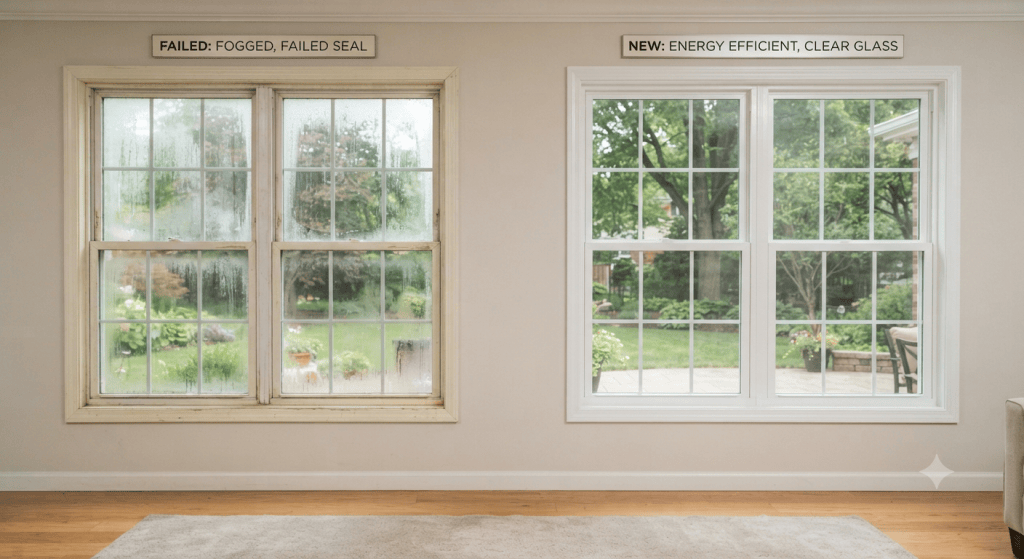
Even well-maintained windows have a finite lifespan. Most residential windows last between 20 and 40 years depending on the material, installation quality, and how consistently they’ve been maintained. When you start seeing the following signs consistently, maintenance has likely reached its limit:
- Persistent fogging between panes that doesn’t clear, indicating total seal failure.
- Drafts you can feel with your hand even after fresh weatherstripping and caulk.
- Visible rot or structural damage in wood frames that compromises the wall opening.
- Condensation on the interior glass surface in cold weather, suggesting the insulating value has dropped significantly.
- Difficulty operating the window even after track cleaning and hardware lubrication.
At that point, the math often favors replacement. According to ENERGY STAR, homeowners who replace old windows with certified energy-efficient models can save up to 12% on annual energy costs, and recoup 65 to 75 percent of the installation cost at resale.
Before committing to a replacement project, it’s smart to understand the full financial picture, whether you’re looking at standard installations or considering something more architectural like bay window installation costs.
The National Fenestration Rating Council provides standardized energy performance ratings for windows, which makes comparison shopping for replacements much more straightforward.
Things to Know
- Window condensation on the exterior glass surface is actually a sign of good performance. It means the glass is staying cold because the window is doing its job of blocking heat transfer.
- Silicone-based caulk is more durable and water-resistant than latex, but it cannot be painted over. Use latex or paintable silicone on wood frames where you plan to repaint.
- Expansion and contraction from seasonal temperature changes is one of the primary reasons caulk fails. Southern climates with wide temperature swings, like those in Tennessee, can accelerate this process.
- Professional window maintenance visits, scheduled at least once a year, catch issues that homeowners commonly miss, including hardware misalignment and failing balancers inside double-hung windows.
- Storm windows, often overlooked in mild climates, add a meaningful layer of insulation in winter and can reduce heating load without the cost of full replacement.
- Chattanooga Window Company serves homeowners across the region who need both maintenance assessments and full window replacement consultations.
Frequently Asked Questions
Q: Does putting aluminum foil on your windows keep the heat out?
Yes, reflective aluminum foil on windows does reduce solar heat gain, but it comes with significant trade-offs.
The foil reflects sunlight before it enters the glass, which can lower indoor temperatures in rooms with heavy direct sun exposure. However, it blocks natural light entirely, damages window film coatings over time, and can trap heat in the glass itself, potentially cracking older single-pane windows. Low-emissivity (low-E) window film is a far more practical and effective solution for long-term heat control.
Q: Can windows last 40 years?
Yes, high-quality windows can last 40 years or more, but only with consistent maintenance and depending on the material.
Fiberglass and aluminum-clad wood windows tend to have the longest functional lifespans when properly maintained. Vinyl windows typically last 20 to 30 years before the frames begin to degrade from UV exposure. The quality of the original installation is equally important since poorly installed windows often fail well before their material lifespan.
Q: Is Windex or vinegar better for windows?
A diluted white vinegar solution is generally better than Windex for routine residential window cleaning.
Windex and similar ammonia-based cleaners can damage window tinting, film coatings, and some rubber seals with repeated use. A mixture of one part white vinegar to ten parts water cleans effectively, leaves no harmful residue, and costs a fraction of commercial sprays. For exterior glass with heavy mineral buildup, a product specifically formulated for hard water stains may outperform both options.
Q: Does putting plastic on windows really help in winter?
Yes, interior plastic film kits create a measurable secondary air barrier that reduces drafts and heat loss during winter.
These shrink-film systems, applied with double-sided tape and a heat gun, work by trapping a thin layer of still air between the film and the glass, similar in principle to a storm window. They are most effective on single-pane windows in older homes where full replacement isn’t immediately feasible. They are a temporary solution, not a substitute for proper weatherstripping, caulking, or eventual window replacement.
Q: What is the best thing to put on windows to keep heat out?
Low-emissivity window film is the most effective product for reducing solar heat gain without blocking natural light.
Low-E film works by reflecting infrared radiation while allowing visible light to pass through. It can reduce solar heat gain by 40 to 70 percent depending on the product and application. Exterior solar shades, interior cellular blinds, and reflective window treatments are strong complementary options for rooms that receive intense afternoon sun.
The Bottom Line on Window Maintenance Tips
Keeping your windows in good shape is less about any single fix and more about a consistent rhythm of inspection, cleaning, sealing, and lubrication spread across the seasons. The payoff is real: lower energy bills, fewer emergency repairs, extended window lifespan, and a more comfortable home year-round. Most of the tasks outlined here cost little more than an hour of your time and under $30 in materials.
If your windows are showing signs that routine maintenance can no longer address, that’s your signal to start evaluating replacement options with a qualified professional. Reach out to Chattanooga Window Company for a consultation and let an experienced team assess whether your windows need targeted repairs or a full upgrade that matches your home’s needs and your budget.