

Choosing Windows for Home Renovation: A Practical Checklist
Knowing how to choose windows for home renovation starts with understanding two things: what your home actually needs and which window features deliver the best return on that investment. Get these two factors right, and every other decision, from frame material to glass type, falls into place much more naturally.
Key Takeaways
- Start with your energy performance goals before selecting any frame material or glass package.
- Double-pane windows are the most popular choice, selected by around 80% of homeowners, while only 11% opt for triple-pane (HIRI, 2025).
- ENERGY STAR certification was rated essential or desirable by 83% of home buyers, making it a strong resale value signal (HIRI, 2025).
- Vinyl accounts for nearly 42% of all residential installations nationally, largely due to its low maintenance and competitive price point (HIRI, 2025).
- The average spending on window and door replacements sits at approximately $14,000, with 82% of projects completed by professional contractors (HIRI, 2025).
- Match your window style to your home’s architecture first, then layer in performance specs.
The U.S. window replacement and installation market was estimated at $12.5 billion in 2024 and is projected to reach $20.1 billion by 2033, growing at a CAGR of 6.1% (HIRI, 2025). With more than 38 million replacement windows installed across the country every year, this is clearly not a niche decision. It is one of the most common and consequential home improvement investments American homeowners make.
Why Your Frame Material Sets the Foundation
Before you look at glass packages, grid patterns, or hardware finishes, the frame material you choose will shape your maintenance schedule, your energy bills, and your overall budget for years to come. According to HIRI’s 2025 data, vinyl windows account for nearly 42% of residential installations nationally, while wood products represent approximately 24%.
Here is a quick breakdown of the four most common frame types and what they mean in practice:
Frame Material Avg. Cost Per Window Maintenance Level Energy Performance Best For Vinyl $300 – $800 Low Good Budget-conscious, low-maintenance Wood $800 – $2,000+ High Excellent (with upkeep) Historic homes, premium interiors Fiberglass $500 – $1,500 Very Low Excellent High-performance, long-term durability Aluminum $250 – $700 Low Fair Modern aesthetics, commercial look Vinyl’s dominance makes sense. It resists moisture, does not need painting, and performs reliably across a wide range of climates, including the hot summers and occasional cold snaps common across Tennessee and the broader Southeast. Wood frames offer unmatched visual warmth but demand regular sealing, staining, or painting to prevent rot and warping.
For a deeper look at how each material stacks up across different home types and climates, the window frame materials guide at Chattanooga Window Company covers the trade-offs in detail. Fiberglass is worth serious consideration if you want a long service life and do not want to spend weekends on upkeep. It expands and contracts at nearly the same rate as glass, which reduces seal failures over time.
Glass Options: Where Energy Savings Actually Happen
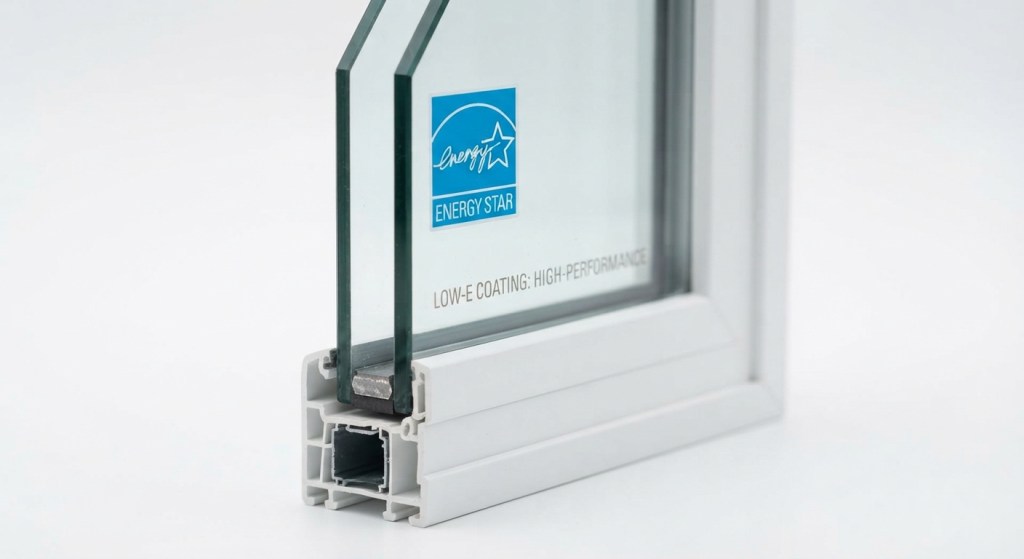
The frame holds everything together, but the glass is where your energy performance lives. Most homeowners choose between double-pane and triple-pane insulated glass units. According to HIRI’s 2025 Project Decision Study, roughly 80% of homeowners select mid-range double-pane options, while only 11% go with top-tier triple-pane.
That statistic tells you something useful: triple-pane is not always necessary, but it is gaining ground. The National Fenestration Rating Council provides standardized ratings for U-factor, solar heat gain coefficient (SHGC), and visible transmittance so you can compare windows objectively before you buy.
Key glass performance specs to look for:
- U-Factor: Measures heat transfer. Lower is better. Look for 0.30 or below for most U.S. climates.
- SHGC: Measures solar heat gain. In warmer climates, a lower SHGC (around 0.25) reduces cooling costs.
- Low-E Coating: A microscopically thin metallic layer that reflects infrared heat. HIRI’s 2025 data shows 67% of home buyers rated low-e insulating glass as essential or desirable.
- ENERGY STAR Certification: Rated essential or desirable by 83% of home buyers (HIRI, 2025). It is also one of the clearest signals to future buyers that your home was upgraded thoughtfully.
The U.S. Department of Energy recommends selecting glass based on your specific climate zone, not just a generic “energy-efficient” label. For homes in the Southeast, where cooling loads dominate, low SHGC values and low-e coatings often deliver more value than triple-pane glass alone.
Matching Window Style to Your Home’s Architecture
Energy performance matters, but so does the way your windows look from both inside and out. Mismatched window styles can undermine curb appeal and even reduce resale value. The right style depends on your home’s architectural character and how each room functions.
Common window styles and where they work best:
- Double-Hung: The most versatile choice. Both sashes open, making cleaning easy. Works in virtually any architectural style.
- Casement: Hinged on one side and cranked open. Excellent ventilation and a tight seal when closed. Popular in Craftsman and contemporary homes.
- Picture/Fixed: No moving parts. Used for views and light where ventilation is not a priority.
- Awning: Hinged at the top. Opens outward and allows ventilation even during light rain. Often paired with picture windows.
- Slider: Two horizontal panels. Low-profile and easy to operate. Works well in modern and ranch-style homes.
- Bay or Bow: Projects outward from the wall. Adds interior space and dramatic curb appeal. Higher installation complexity and cost.
For homeowners replacing windows in older properties, matching the original style is often the right call, both aesthetically and from a neighborhood character standpoint. If your home is a mid-century ranch, a set of clean aluminum sliders or casements fits the era. If it is a Victorian or Craftsman bungalow, double-hung wood or fiberglass frames with grilles tend to honor the original architecture.
Planning Around Cost, Timeline, and Project Scope
Once you have settled on materials and styles, you need a realistic picture of what the project will actually cost and how long it will take. HIRI’s 2025 Project Decision Study found that the average spending on window and door replacements sits at around $14,000. That figure covers a range of scenarios, from a small single-story home with six to eight windows to a larger project covering an entire house.
Most homeowners replacing windows said they did so to fix damaged frames or sills (37%), achieve more energy savings (20%), or correct indoor temperature issues (12%), according to HIRI’s 2025 data. If your motivation aligns with one of these three, your spec decisions become clearer: damaged frames push you toward durable materials like fiberglass; energy savings prioritize ENERGY STAR-rated glass; temperature issues often point to better insulation values overall.
The timeline varies by project size, installer availability, and whether custom sizing is required. For a detailed breakdown of what to expect week by week, the how long does window replacement take complete timeline guide 2026 from Chattanooga Window Company lays it out clearly. Standard replacement windows in common sizes typically install faster than custom orders, which can add several weeks to the lead time.
HIRI’s 2025 research also found that 82% of window replacement projects used professional contractors, with only about 7% done entirely DIY. This is not surprising given the technical requirements of proper flashing, sealing, and ensuring plumb installation. A poorly installed window, regardless of quality, will underperform on energy savings and potentially allow water infiltration over time.
How to Evaluate Contractors and Make Your Final Decision
Online research dominated the information-gathering process for homeowners in 2025, with 73% researching online, 47% relying on customer reviews, and 43% using word-of-mouth recommendations (HIRI, 2025). That tells you exactly how other homeowners are vetting their options, and it is a reasonable approach as long as you go deeper than star ratings alone.
When evaluating contractors, look for:
- Manufacturer certification: Many top window brands offer certified installer programs. Certification often comes with extended labor warranties.
- Local references: Ask for contacts in your specific area, not just a general testimonials page.
- Written quotes: Any reputable contractor will provide a detailed written estimate covering product specs, labor, disposal of old windows, and warranty terms.
- Insurance and licensing: Verify state contractor licensing and general liability coverage before signing anything.
Fixr.com’s 2025 home remodeling statistics provide additional context on average project costs across different regions, which is useful for benchmarking quotes you receive locally.
When comparing major brands, the Pella vs. Andersen debate comes up often. Both are well-established American manufacturers with strong product lines. Pella tends to offer more design flexibility and mid-range pricing on its entry-level lines, while Andersen’s 400 Series is widely regarded as a benchmark for wood-clad performance. The right choice often comes down to your specific window style, local dealer availability, and whether a particular product line has the energy ratings your climate zone requires.
The Bottom Line on How to Choose Windows for Home Renovation
Knowing how to choose windows for home renovation is less about picking the most expensive option and more about matching the right combination of frame material, glass performance, and window style to your home’s specific needs and climate. Start with your energy goals, confirm the ENERGY STAR ratings, choose a frame material that fits your maintenance tolerance, and hire a licensed contractor with verifiable local references.
If you are in the Chattanooga area, the team at Chattanooga Window Company is available to help homeowners in the greater Chattanooga area work through exactly these decisions, from initial product selection through completed installation.
Frequently Asked Questions
Q: What is the average cost to replace 10 windows in a house?
Based on HIRI’s 2025 data, average spending on window and door replacements runs around $14,000, which for a 10-window project typically works out to $1,000 to $1,400 per window installed.
That per-window figure includes materials, labor, and disposal of old units. The actual number varies based on frame material, glass package, window size, and local labor rates. Custom sizes and premium materials like fiberglass or wood push costs toward the higher end.
Q: What kind of windows are in style now?
Casement and double-hung windows remain dominant, but large-format picture windows and black-frame aesthetics are increasingly popular in new construction and renovation projects.
Black aluminum or fiberglass frames paired with clear or minimally divided glass give homes a clean, contemporary look that works across both modern and transitional architectural styles. Slimmer sightlines and larger glass areas are the dominant trend in 2024 and into 2025.
Q: Is Pella or Andersen windows better?
Neither brand is universally better; the right choice depends on your window style, climate zone, and budget.
Andersen’s 400 Series wood-clad windows are a long-standing benchmark for performance and aesthetics in premium projects. Pella offers strong mid-range options and greater design flexibility across its product lines. Both carry ENERGY STAR certifications across key product categories, so comparison should focus on specific product specs rather than brand loyalty.
Q: Is it worth replacing 60 year old windows?
Yes, in most cases replacing 60-year-old windows delivers meaningful energy savings, improved comfort, and higher resale value.
Windows from the 1960s typically have single-pane glass with aluminum frames and no low-e coating, making them significantly less efficient than any modern replacement. The improvement in U-factor alone, going from roughly 1.0 or higher on old single-pane glass to 0.30 or below on modern double-pane units, translates to noticeable reductions in heating and cooling costs.
Q: Are window prices going up in 2026?
Window prices are expected to remain elevated in 2026, driven by material costs, tariff uncertainty, and sustained demand in the replacement market.
The window replacement and installation market is projected to grow at a CAGR of 6.1% through 2033 (HIRI, 2025), which generally supports continued price pressure rather than significant relief. Homeowners who can commit to a project in early 2026 may benefit from locking in quotes before seasonal demand peaks in spring and summer.