
Window Frame Materials Compared: Aluminum, Vinyl, Fiberglass, Wood, and Composite
Choosing the right window frame materials directly affects your home’s energy efficiency, curb appeal, maintenance burden, and long-term costs. Each material comes with a distinct set of trade-offs, and understanding those differences before you buy will save you from an expensive mistake.
Key Takeaways
- Vinyl is the most popular choice in the U.S., holding 55.3% of the commercial window market revenue share in 2025, and it offers strong energy performance at a lower price point.
- Fiberglass frames are the most dimensionally stable option, resisting warping and expansion across extreme temperature swings.
- Wood frames deliver the best natural insulation but require the most maintenance of any material on this list.
- Aluminum frames are the strongest by strength-to-weight ratio, making them ideal for large commercial openings.
- Composite frames are growing faster than any other category, projected at a 6.29% CAGR through 2030, as homeowners seek low-maintenance alternatives with wood-like aesthetics.
- Your local climate should weigh heavily in your material decision, since performance characteristics shift considerably between humid, arid, and freeze-thaw environments.
The window and door frame industry is substantial and expanding. According to SkyQuest (2026), the global market was valued at USD 182.52 billion in 2024 and is projected to reach USD 298.85 billion by 2033, at a compound annual growth rate of 5.62%. That level of investment signals just how consequential the material choice really is, both for manufacturers and for American homeowners making purchasing decisions right now.
Why Your Frame Material Matters More Than You Might Think
Most homeowners focus heavily on the glass unit when shopping for new windows, which makes sense since glazing affects energy performance significantly. But the frame surrounding that glass does a great deal of heavy lifting. It holds the glass in place structurally, forms the thermal barrier between inside and outside, and determines how much upkeep you will face over the next 20 to 30 years.
Frame material also influences your window installation cost 2026 guide, sometimes dramatically. A basic vinyl double-hung unit will cost far less than a custom fiberglass or clad-wood frame, even before labor is factored in. Beyond cost, the frame interacts with your local weather, your wall construction type, and even your HOA guidelines. Getting this decision right from the start is worth the research time.
According to Mordor Intelligence (2026), uPVC accounted for 42.82% of the insulating glass window market in 2024, confirming that plastic-based frames dominate for good reasons: affordability, durability, and low maintenance. Still, they are not right for every situation.
Breaking Down Each Window Frame Material
Vinyl Frames
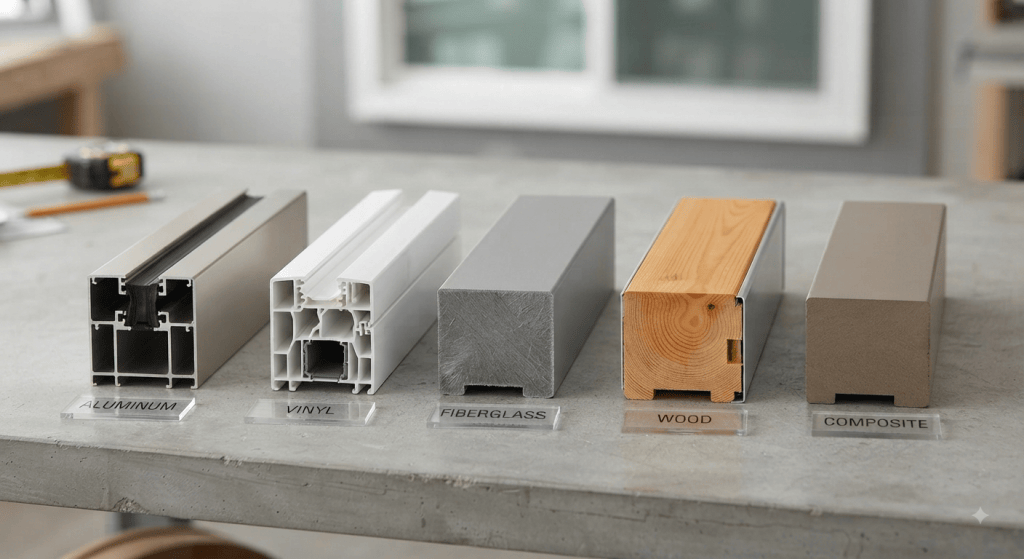
Vinyl, also called PVC or uPVC, is the most widely used residential window frame material in the United States. According to Grand View Research (2025), vinyl held 55.3% of the U.S. commercial windows segment revenue share in 2025. Its popularity comes down to a few practical advantages.
Vinyl frames do not rot, corrode, or require painting. They are hollow by design, and the air chambers inside act as natural insulators. For most homeowners in moderate climates, vinyl provides excellent thermal performance without the premium price tag. The primary downside is that vinyl expands and contracts with temperature changes more than other materials, which can stress seals over time in regions with wide seasonal swings.
Vinyl at a glance:
- Cost: Generally the lowest upfront cost of all frame types
- Maintenance: Minimal, clean occasionally with soap and water
- Lifespan: 20 to 40 years depending on climate and quality tier
- Best for: Budget-conscious homeowners in moderate climates
Fiberglass Frames
Fiberglass is often described as the premium evolution of vinyl. It offers superior dimensional stability, meaning it expands and contracts far less than vinyl or aluminum across temperature extremes. The fiberglass window market was estimated at USD 13.39 billion in 2024, according to Market Research Future (April 2025), which reflects growing demand from homeowners willing to pay more for longevity.
Fiberglass frames can be painted, accept stains, and are manufactured to mimic the look of wood without the associated upkeep. They are also stronger than vinyl pound for pound, which allows for slimmer sightlines and larger glass areas. The trade-off is cost. Fiberglass typically runs 20% to 30% more than comparable vinyl units, though lifetime value often justifies the gap.
Fiberglass at a glance:
- Cost: Higher upfront, lower lifetime maintenance cost
- Maintenance: Very low, can be repainted if needed
- Lifespan: 30 to 50 years or more
- Best for: Homeowners in extreme climates or those prioritizing longevity
Wood Frames
Wood has been the traditional choice for American homes for centuries, and it remains in use for good reason. Wood is a natural insulator with excellent thermal properties, it takes paint and stain beautifully, and it can be repaired rather than replaced when damage is localized. Historic preservation guidelines in many U.S. cities, including those governed by local landmark commissions, often require wood frames for renovations.
The downside is substantial: wood requires painting or sealing every few years, is vulnerable to moisture intrusion, and can host insects if not properly maintained. Clad-wood frames, which pair a wood interior with an aluminum or fiberglass exterior shell, offer a middle ground. They give you the interior warmth of wood with reduced exterior upkeep.
If you are researching how different frame types perform across American climates, the best windows for climate resource from Chattanooga Window Company covers this in useful detail.
Aluminum Frames
Aluminum frames are strong, slim, and resistant to corrosion, which is why they dominate commercial construction and large-format residential applications. When you need a frame that can span a wide opening without adding bulk, aluminum is often the practical answer. It does not warp, swell, or rot.
The significant drawback is thermal conductivity. Aluminum transfers heat and cold readily, making standard aluminum frames poor performers in energy-conscious residential builds. Most quality aluminum frames now incorporate a thermal break, a non-conductive material inserted between the interior and exterior aluminum sections, which greatly improves their insulating value. Even so, for most U.S. homeowners focused on energy efficiency, aluminum will rank below vinyl and fiberglass on that metric.
Composite Frames
Composite frames blend wood fiber, PVC, and other polymers into a material that performs like wood but resists moisture and insects far better. According to Mordor Intelligence (2026), composite frames are forecast to grow at a 6.29% CAGR through 2030, the fastest growth rate of any frame category. That momentum reflects a growing consumer preference for materials that look premium without demanding premium maintenance.
Composite frames accept paint, resist warping, and outperform pure wood in humid conditions. They also tend to cost more than vinyl while remaining less expensive than top-tier fiberglass. For homeowners who want wood aesthetics without the upkeep, composite is an increasingly compelling option.
Side-by-Side Comparison of Window Frame Materials
| Material | Avg. Lifespan | Insulation Value | Maintenance Level | Relative Cost | Best Climate Fit |
|---|---|---|---|---|---|
| Vinyl | 20-40 years | Good | Very Low | $ | Moderate |
| Fiberglass | 30-50+ years | Excellent | Very Low | $$$ | All climates |
| Wood | 30+ years (with upkeep) | Excellent | High | $$-$$$ | Dry to moderate |
| Aluminum | 20-30 years | Fair (with thermal break) | Low | $$ | Coastal, commercial |
| Composite | 30-50 years | Very Good | Low | $$-$$$ | All climates |
How Climate and Region Should Influence Your Choice
Climate is one of the most underrated factors in selecting a frame material. If you live in a hot, sunny region like Arizona or Texas, frames that resist UV degradation and thermal expansion matter more than they would in a mild mid-Atlantic climate. Fiberglass and composite hold up particularly well under sustained heat. For humid coastal regions, wood without cladding is generally a poor choice due to moisture risk, while vinyl, fiberglass, and composite all perform reliably.
In cold northern states where temperatures drop well below freezing, the thermal break quality in aluminum frames and the dimensional stability of fiberglass become key factors. Understanding double hung windows benefits can also help you pair the right frame with the right operating style for your region’s ventilation needs.
If you have already selected your frame type and are planning a project timeline, the how long does window replacement take complete timeline guide 2026 is a useful reference for setting realistic expectations.
Maintaining Your Window Frames Over Time
Regardless of which material you choose, some level of maintenance extends the life and performance of your frames significantly. The 10 window maintenance tips to extend their lifespan from Chattanooga Window Company covers the specific steps that apply to different frame types, from cleaning vinyl tracks to resealing wood frames before winter.
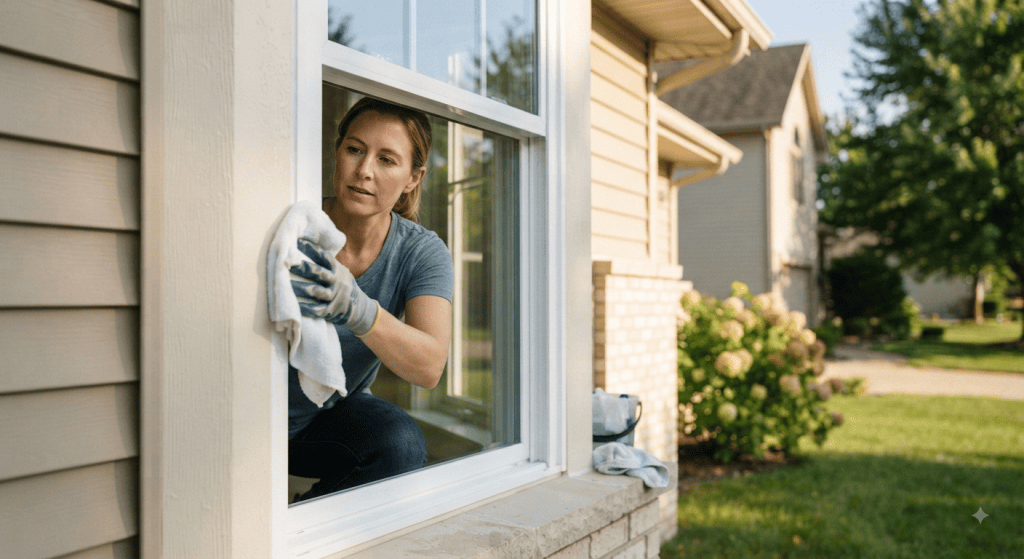
Annual inspections of weatherstripping, sealant beads, and hardware should be standard practice for any homeowner. Addressing small gaps or cracks early prevents moisture intrusion that can compromise both the frame and the surrounding wall structure. For vinyl and fiberglass, cleaning with a mild soap solution twice a year is typically sufficient. Wood frames need a closer look each spring for signs of peeling, cracking, or soft spots.
For additional guides on related topics, the Chattanooga Window Company blog regularly publishes practical homeowner resources covering installation, materials, and maintenance.
Things to Know
- Vinyl frames can fade or warp in sustained high-heat environments if you select lower-grade products. Always look for titanium dioxide content, which improves UV resistance.
- Fiberglass expands and contracts at nearly the same rate as glass, which is one reason its seals tend to outlast those on vinyl frames in climates with wide temperature swings.
- “Composite” is not a single standardized material. Product quality varies widely between manufacturers, so always ask for warranty terms and third-party performance ratings.
- A thermal break in an aluminum frame is not optional if you live anywhere with cold winters. Without it, condensation on the interior frame face is common and causes long-term moisture damage.
- Residential installations held 51.20% of window frame market revenue in 2024, according to Mordor Intelligence (2026), confirming that homeowner demand continues to drive product innovation.
- Wood clad frames often qualify for historic tax credits in designated preservation districts. Check with your local planning office before assuming you cannot use a modern alternative in a historic home.
The Bottom Line on Window Frame Materials
Selecting the right window frame materials is one of the most durable decisions you will make during a home improvement project. Vinyl delivers strong value and performance for most American homeowners. Fiberglass is the long-term investment that pays off in stability and reduced lifetime costs. Wood brings warmth and character at the price of consistent care. Aluminum serves large commercial openings better than residential ones. Composite sits in a growing middle ground, offering premium aesthetics with practical durability.
Your best starting point is to match the material to your specific climate, your maintenance tolerance, and your budget ceiling. If you are ready to move forward, consult with Chattanooga Window Company to get a professional assessment of which frame type fits your home and region before making any final decisions.
Frequently Asked Questions
Q: What material is best for window frames?
The best material depends on your budget, climate, and maintenance preferences, but fiberglass offers the most balanced performance across all three categories.
Vinyl is the best value for most homeowners in moderate climates. Fiberglass is the top performer if longevity and stability across temperature extremes matter most. Wood remains the preferred choice where aesthetics and historic accuracy are priorities, provided you are prepared for the upkeep.
Q: Which window frame lasts the longest?
Fiberglass frames have the longest documented lifespan, typically 30 to 50 years or more with minimal maintenance.
Composite frames come close behind fiberglass in longevity, especially in humid climates. Wood can also last decades, but only with consistent painting and sealing, making it the highest-effort option for longevity.
Q: What are the strongest window frames?
Aluminum frames are the strongest by structural rating, offering the highest strength-to-weight ratio of any common frame material.
This is why aluminum dominates large commercial openings and curtain wall systems where structural loads are high. For residential use, fiberglass is typically considered the best balance of strength and insulation performance.
Q: What is the best material for window frames in hot climates?
Fiberglass and composite are the top-performing window frame materials in hot climates because of their low thermal expansion rates and UV resistance.
Vinyl can work in hot climates if you select a high-grade product with UV inhibitors, but lower-tier vinyl may soften, warp, or fade over time in regions with sustained heat above 90°F. Aluminum with a thermal break is acceptable for commercial use but conducts heat too readily for most residential energy goals in hot regions.
Q: How thick are most window frames?
Most standard residential window frames range from 3 to 4 inches in depth, though this varies by material and product line.
Aluminum commercial frames may be slimmer, while fiberglass and composite frames for high-performance builds can run thicker to accommodate additional insulation. Always verify frame depth against your wall thickness before ordering, as mismatches require extension jambs and add cost.